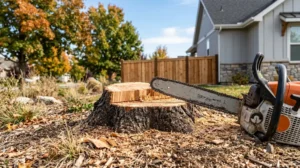
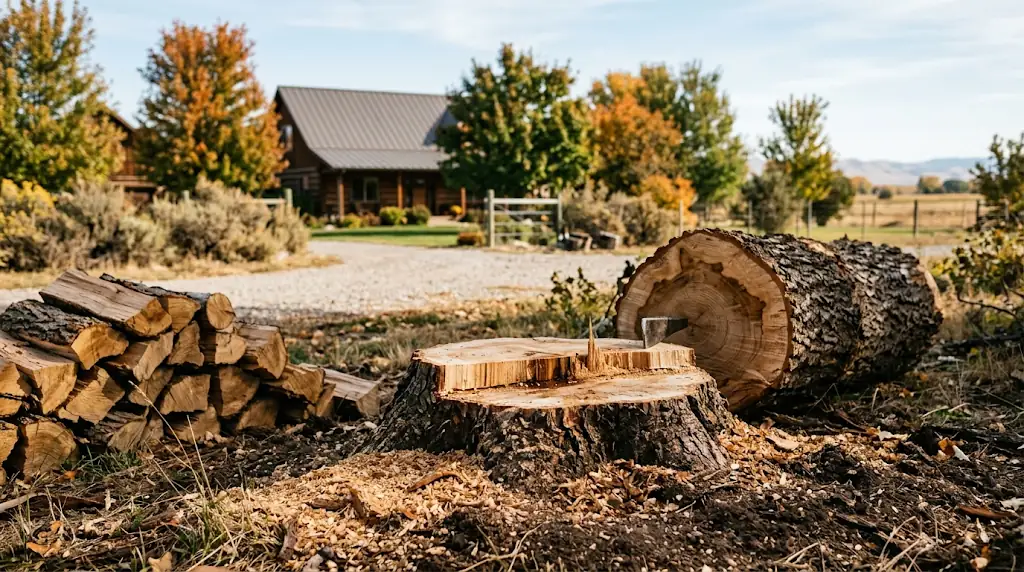
Tree removal in the Treasure Valley typically costs between $300 and $2,000, with most homeowners paying an average of $750 to $1,200 per tree. Final pricing is dictated strictly by tree height, trunk diameter, proximity to structures or power lines, and whether the job requires specialized equipment like a 60-ton crane or manual sectional rigging.
Treasure Valley Tree Removal Cost Breakdown
Tree removal costs scale primarily with the height and mass of the timber. Larger trees demand more labor hours, heavier rigging systems, larger transport trailers, and higher disposal fees at municipal transfer stations.
| Tree Size Class | Height Range | Average Cost Range | Typical Local Species |
| Small | Under 30 feet | $300 – $550 | Crabapple, Serviceberry, Japanese Maple, Chokecherry |
| Medium | 30 to 60 feet | $600 – $1,100 | Green Ash, Honey Locust, Birch, Austrian Pine |
| Large | 60 to 80 feet | $1,200 – $2,000 | Siberian Elm, Silver Maple, Blue Spruce |
| Extra-Large / Hazard | 80+ feet | $2,000 – $4,500+ | Mature Plains Cottonwood, Multi-Stem Black Willow |
Key Factors That Dictate Removal Costs in Ada & Canyon Counties
Tree removal pricing does not operate on a flat per-tree fee. Five specific site variables determine where an estimate falls within the price range:
1. Proximity to Structures and Utilities
A freestanding pine tree in a wide-open acre in Kuna requires less labor than a decaying silver maple overhang in a tight zero-lot-line patio home in Meridian. When limbs hang directly over rooflines, vinyl fences, or irrigation lines, crews cannot drop timber whole. Every lateral limb must be roped, cut, and lowered using friction brakes and dynamic rigging blocks.
2. High-Voltage Power Line Clearances
Trees growing near electrical lines present severe life-safety hazards. Under Idaho Power Safety Standards, uncertified individuals are prohibited from working within critical clearances of primary overhead lines. If limbs cross into line utility buffers, the job requires utility-line certified arborists or coordinated de-energization with the utility company, which increases project overhead and setup time.
3. Crane-Assisted vs. Manual Rigging Access
When backyard access gates are too narrow for skid steers or tracked bucket lifts (common in suburban subdivisions in Star and Eagle), equipment must either be brought through fences or lifted overhead. If a crane is required to hoist 2,000-pound logs over a house to prevent turf and structural damage, crane mobilization fees add roughly $800 to $1,500 to the baseline removal price.
4. Tree Structural Integrity and Health
Dead trees are brittle and unpredictable. A tree suffering from advanced trunk rot or Dutch elm disease cannot support the weight of a climbing arborist using spurs and flip-lines. In these cases, crews must deploy bucket trucks or mobile boom lifts. The higher the fall risk to personnel, the higher the insurance and equipment overhead required.
5. Soil Profile and Root Ball Anchoring
High-desert soil conditions across Meridian, Caldwell, and Nampa feature hardpan caliche layers roughly 12 to 36 inches below grade. These restrictive barriers force large trees like silver maples and cottonwoods to establish broad, shallow root plates rather than deep taproots. During seasonal windstorms, these trees are prone to partial windthrow or root heaving, turning a standard removal into an active structural stabilization project.
Add-On Service Rates in the Treasure Valley
The base removal price covers dropping the tree safely to grade level. Additional clean-up, processing, and underground extraction carry separate, itemized costs.
- Stump Grinding: $150 to $450 per stump. Pricing depends on diameter measured at the widest root flare and grinding depth (typically 6 to 12 inches below grade).
- Debris Hauling and Chipping: $100 to $300. Wood chipping reduces disposal bulk, but landfill fees apply for heavy rounds that cannot be chipped.
- Log Bucking and Splitting: $75 to $200. Crews cut the trunk into manageable 16-inch firewood lengths and stack them on-site for personal use.
- Emergency Storm Mobilization: +50% to 100% over standard rates. Immediate 24/7 response following wind gusts in excess of 50 mph involves hazardous tension cuts on fallen timber resting on rooftops or driveways.
Permitting and Local Code Requirements
Before cutting down a tree, verify municipal jurisdiction and right-of-way boundaries:
- Private Property Trees: The cities of Meridian, Boise, Nampa, Caldwell, and Star do not require tree removal permits for standard private residential backyards. Homeowners possess full property rights to manage private timber.
- Street Trees and Public Rights-of-Way: If a tree stands within the parkway buffer (the grassy strip between the sidewalk and the road curb), it falls under local right-of-way management. In Boise, the Community Forestry Division mandates permits for street tree alterations. In Nampa, a no-fee permit from the Parks and Recreation Forestry Division is required prior to removing any right-of-way tree. In unincorporated Ada County subdivisions, consult the Ada County Highway District (ACHD) regarding work impacting public road shoulders.
- Underground Utilities: If stump grinding is included in the project, Idaho law requires underground lines to be located. Contact Digline (811) at least two business days prior to excavation to mark buried gas, electric, and fiber optic lines.
Common Tree Species and Their Removal Challenges in the Treasure Valley
Siberian Elm (Ulmus pumila)
- Average Removal Cost: $900 – $2,200
- Characteristics: Extremely fast-growing, weak-wooded, and heavily prone to heart rot and beetle infestations. Large limbs break under heavy wet spring snow and high summer valley winds. Their brittle branches require intricate rigging to prevent collateral impact.
Plains Cottonwood (Populus deltoides)
- Average Removal Cost: $1,800 – $4,000+
- Characteristics: Massive timber common along irrigation canals and river bottoms in Caldwell, Eagle, and Boise. Due to their immense water weight and soft, spongy wood fibers, mature cottonwoods yield multi-ton log sections that demand heavy-duty rigging and extensive hauling capacity.
Silver Maple (Acer saccharinum)
- Average Removal Cost: $1,000 – $2,400
- Characteristics: Widely planted across older subdivisions in Meridian and Boise during the 1980s and 1990s. They feature narrow, V-shaped crotches that split under structural load. In tight suburban parcels, dismantling a broad 60-foot canopy piece-by-piece requires full-day technical rigging.
Cost-Reduction Checklist for Homeowners
To minimize out-of-pocket expenses on a tree removal project:
- Retain the Wood for Firewood: Instruct the crew to drop and leave the trunk wood cut into fireplace-length rounds. This eliminates log loader transport and local landfill dumping fees.
- Keep the Wood Chips on Site: Fresh wood chips make excellent weed-suppressing mulch for planting beds and acreage perimeter paths. Eliminating chip haul-away drops overall equipment mobilization costs.
- Schedule During Dormant Months: Winter removals (November through February) often feature better scheduling availability compared to peak summer and post-spring-storm periods.
- Clear Ground-Level Access Paths: Remove patio furniture, detached sheds, trampolines, and temporary fence sections prior to crew arrival to reduce total labor hours.
Get a Firm, In-Person Estimate
Tree removal requires assessing specific drop trajectories, overhead utility lines, and drop-zone physics directly on-site. Meridian Tree Removal provides zero-obligation, transparent property evaluations throughout Meridian, Boise, Nampa, Eagle, Kuna, Caldwell, and Star. Contact our certified crew today through our contact page to schedule an inspection and receive an upfront, itemized project estimate.